In order to graduate from high school in Washington state, seniors must complete what is termed a culminating project. Students select a topic that they can pursue in depth by applying the skills and knowledge they have gained in high school. Students are encouraged to something they are passionate about. The seniors will present their topics in March.
The projects of five students illustrate the range of topics that students chose.
Elizabeth N. Starnes is composing a song for trumpet, her musical instrument of choice.
For her proposal, she wrote:
The purpose of this project has been to explore the process of creating music and songs, as well as for me to dive further into playing music.
Stangers said that music and musical performance is what she really wants to do in the future because “I love creating melodic or energizing sounds on my trumpet,” she wrote. “I thought creating a song on my own would be a fun experience, and I now have new respect for any composer alive.”
Leila Mozaffarian set out to help children in Iran through “The Dream Project.”
The nonprofit helps children in Iran who have been abused, are abandoned or who have drug-addicted parents.
Her goal is to raise $150,000 by the end of June 2012.
She writes: “The money raised would help find a shelter to get the children away from the bad environment they currently live in. [It would be a place] where they would get educated, fed and sheltered by volunteers from a program that already exists in Iran.”
She hopes to encourage people to go to the Dream Project website at http://dreamproject2.weebly.com/ to find out more and donate.
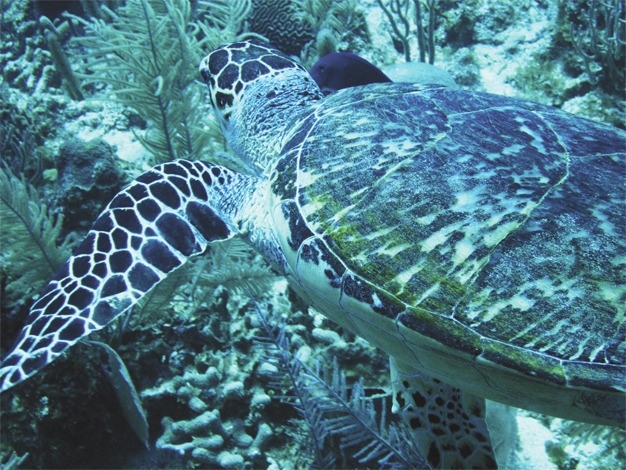
Molly Goldberg set out to earn an advanced certification for scuba diving and to learn underwater photography for her project.
“The purpose is for me to be able to explore the world at a whole new level, and learn about my passion for photography in a new perspective,” she wrote.
Her project required her to take a series of tests that measured both her knowledge and physical skills of negotiating underwater. She went on multiple dives with an instructor “who judged me on how well I could navigate, adjust to my surroundings as well as dealing with emergencies underwater.”
The underwater photography class was fun, she said, but she quickly learned how difficult it was.
“You must stay pretty still while taking the photo, and well as having to deal with the flash, the subject, and at the same time, all trying to make the picture come out clear and interesting to the viewer,” she said.
Sam Bender and Dylan Sullivan set out to “find the distance to an object using only an iPhone.”
Their method involved devising mathematic formulas to use data gathered from a phone to determine the distance to an object.
Bender writes: “We Skype once a week with a Ph.D. candidate in mathematics at the University of Minnesota. [In] our first 10 meetings, he taught us calculus. Then we talked about discrete data integration and how to analyze images. [We have] collected data from the phone and analyzed it with a program called MATLAB.”
There are challenges, he notes.
“Currently, we are dealing with problems that arise because of the accuracy and precision of the data,” Bender said.
Bender said that he and Sullivan enjoy working on this project and would be working on it “even if it wasn’t our culminating project.”
He adds that he is “purposely vague” in this description in order not to reveal how the process works in detail.