As an octogenarian, what is the meaning of my life? | Hamer
Published 9:20 am Monday, April 20, 2026
I turned 80 on April 15. Yikes! I knew I’d get old, but didn’t realize it would happen so fast. Somehow this eight-decade mark hit me harder than turning 50, 60, or 70.
There was clearly cause for celebration: It was also my wedding anniversary. (I got married on my birthday so I wouldn’t forget that annual event!) So my wife and I went up to Suncadia for a soak in the hot pools at the spa, a nice dinner at the Lodge, and walks on the snow-covered trails.
The next day, she arranged for me to have an 80-minute massage, another soak in the hot pools, time in the sauna and steam room, and a good lunch in the Lodge.
Last Friday, we gathered with family members for my granddaughter’s 13th birthday. She is becoming a talented writer and artist, and it’s wonderful to watch her blossom.
On Saturday, we had our book club members over to our new apartment at The Mercer for dinner, wine, and our usual robust conversations. We’ve been meeting for several years now and some of us are also feeling the effects of aging.
But rather than discussing the same book, as we’ve done in the past, we decided to give brief reports on whatever book we’ve each been reading lately and make suggestions for our next gathering.
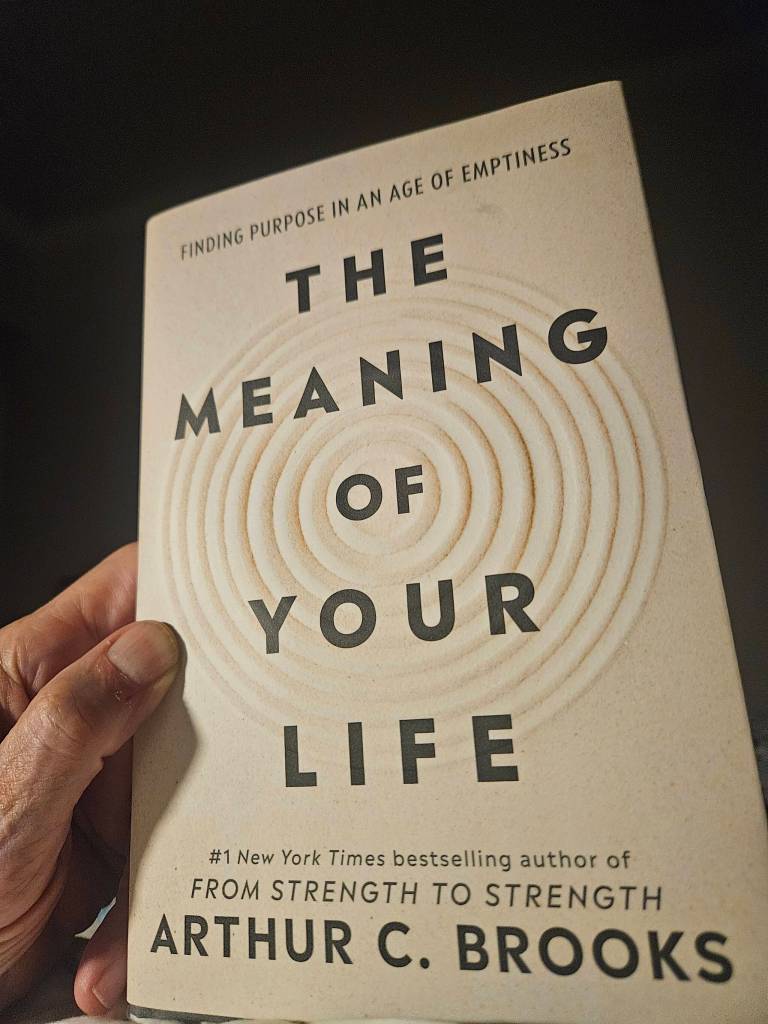
My recommendation: “The Meaning of Your Life” by Arthur C. Brooks, which just hit number one on The New York Times’ best-seller list. I got the book a few weeks ago when I signed up for a national online webinar that Brooks conducted. It was a fascinating few hours. Panelists included Oprah Winfrey, Raine Wilson, Hoda Kotb, and several other speakers. Brooks has Seattle roots: His parents were both professors at Seattle Pacific University.
Brooks is known as “the happiness guru.” He has been a professor at Harvard’s Kennedy and Business Schools, a CBS news contributor, a columnist at The Free Press, and author of several books, including “Build the Life You Want” (co-authored with Oprah), “Love Your Enemies,” and “Strength to Strength.”
His webinar was extremely well organized. In advance, Brooks asked all who registered to complete the “Meaning in Life Questionnaire.” It’s a thought-provoking exercise where you respond on a 7-point scale (from “absolutely true” to “absolutely untrue”) to 10 provocative statements such as “I understand my life’s meaning.” “I am always looking to find my life’s purpose.” “I have a good sense of what makes my life meaningful.” “My life has a clear purpose.”
You add up your scores to see what category you’re in:
• Lost in Place: Your sense of meaning is low, but you aren’t actively looking for it either.
• Hopeful Wanderer: You don’t know your life’s meaning, but you figure it’s out there and you’re looking for it.
• Happy Homebody: You strongly sense your life’s meaning so don’t spend much time or effort searching.
• Relentless Seeker: You are above average on a personal sense of meaning but are still seeking it aggressively.
My score made me a Relentless Seeker, which Brooks defines as: “Yes, I have a sense of meaning, but I want more.” He himself is also a Relentless Seeker. But he adds a cautionary note: “Relentless Seekers can be hard to live with — even for themselves — because they are never satisfied. … It can make me a bit nomadic, looking for something new and questioning everything. Sometimes it drives my wife crazy, I confess.”
If all this seems a bit like omphaloskepsis (one of my favorite words), Brooks urges us to remember three basic formulas:
• Happiness = enjoyment + satisfaction + meaning.
• Meaning = coherence + purpose + significance.
• Meaning has two dimensions: presence (have you found it?) and search (how hard are you looking for it?).
If all this seems overly self-centered, self-conscious, and even self-indulgent, well, you be the judge. But for me, facing my 80th birthday, it seemed worth a try.
To help us all get started, Brooks recommended “6 Ways to Start Your Day”:
• Wake up early, go outside and watch the rising sun. In Hindu practice, this is known as Brahma Muhurta, or “the Creator’s time.”
• Dedicate 30-60 minutes to exercise, including movement, resistance and cardio.
• Spend 20-30 minutes in meditation, reflection or prayer. (And maybe most important: Don’t pick up your phone!)
• Delay coffee until 90+ minutes after waking up.
• Make your first meal protein-rich: Greek yogurt, whey protein, nuts, eggs, lean meats.
• Block your first 2-4 hours for creative or focused work: writing, planning, problem-solving. Avoid emails, meetings or calls until later in the day.
With a couple of unavoidable stumbles, I’ve followed these steps. And you know what? I feel better, more energized, more creative, more effective, more relaxed, and more content. My wife concurs, and she knows my moods better than I do.
Brooks also offers 9 steps for the end of the day, which I’m still struggling to follow. They include eating dinner earlier, avoiding alcohol or desserts, taking after-dinner walks, leaving your phone outside the bedroom, avoiding junk food, going to bed earlier, talking to your spouse/partner about the day, reading a good book in bed, and counting sheep in your head to doze off to sleep.
Those all are somewhat difficult for an aging octogenarian who is set in his daily habits and resistant to change. But Brooks offers a final out: “Step Nine: Nevermind.” He calls it a “state of surrender – the willingness to accept what is without resistance.”
As I face my 80s, that strikes me as pretty good advice. Hey, maybe you can teach an old dog new tricks! Woof!
–
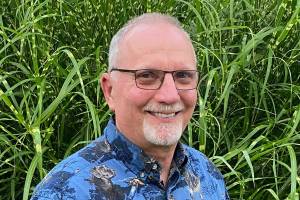
Mercer Island resident John Hamer (jhamer46@gmail.com) is a former editorial writer/columnist at The Seattle Times, co-founder (with his wife, Mariana Parks) of the Washington News Council, an active member of Mercer Island Rotary, convener of the Friends of Dragon Park coalition, and grandfather of four.