Rep. Smith discusses student safety, Iran and more at MI Rotary meeting
Published 4:30 pm Thursday, June 18, 2026

By Linnea Augustine
Special to the Reporter
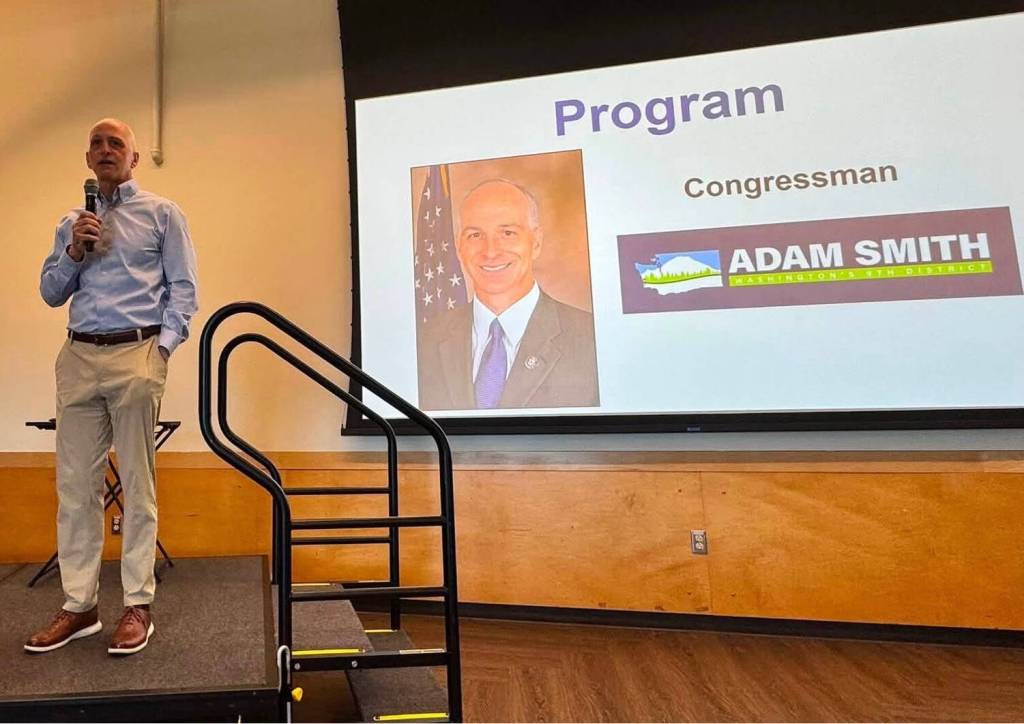
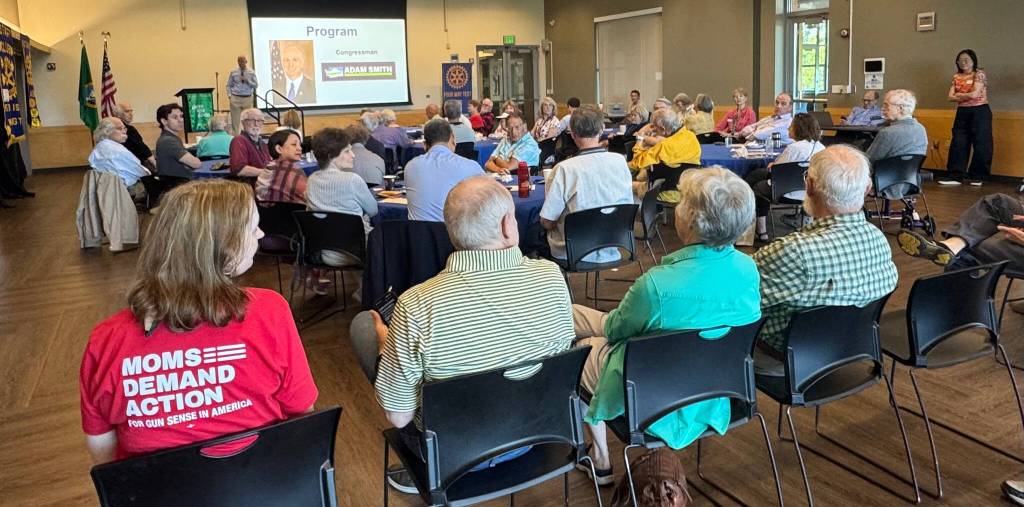
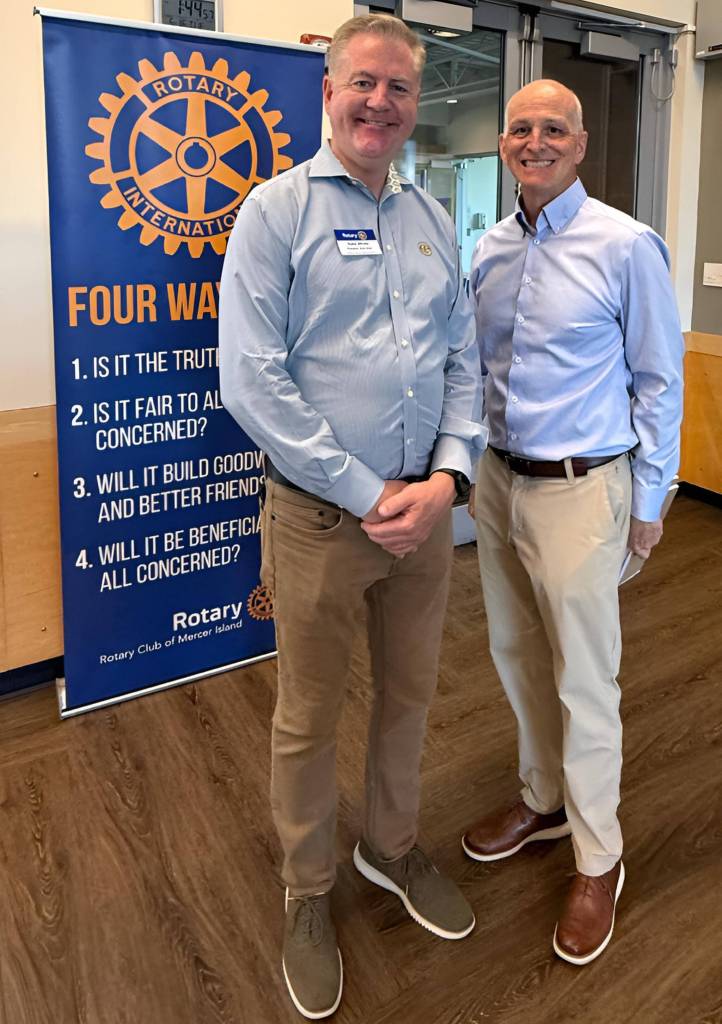
The Rotary Club of Mercer Island hosted U.S. Rep. Adam Smith for a Q&A that started a little late but ran longer than scheduled on June 16 at the Mercer Island Community and Event Center.
The questions were not pre-selected, and the discussions ranged from student safety and Iran to cost of living, political polarization and local concerns about Puget Sound Energy’s pricing for solar panels.
Smith, D-Wash., has represented Washington’s 9th Congressional District for nearly 30 years and serves as a ranking member of the House Armed Services Committee. He opened by saying the country is “more divided as a nation” and naming three priorities: preserving representative democracy, bringing back broad-based economic opportunity and building a more peaceful world.
Student safety and accountability
Rotary President Todd White asked Smith about student safety and sexual abuse in schools, citing Mercer Island School District’s $13 million lawsuit involving a former student who claimed she was sexually abused by a teacher and saying other districts face similar issues.
“We have to have accountability. Okay, you have to enforce rules and enforce the law,” Smith said.
He also said “root causes absolutely matter,” but added that without rules and enforcement, “you create a culture that says the rules don’t apply.”
When another Rotary member asked whether any sexual-assault case should be reported immediately to law enforcement instead of being handled by school administration, Smith answered, “Yes, absolutely.”
Iran and the Middle East
Asked about the fallout and cost of the war with Iran, Smith called it “one of the dumbest damn things I’ve ever seen.” He cited service members killed and wounded, civilian deaths, economic disruption, higher gas and fertilizer prices and Iran gaining “greater power and greater leverage in the Middle East” through the Strait of Hormuz.
Smith called ending the war “better than continuing it,” adding, “It’s better than believing that if we simply dropped a few more bombs, that would somehow make Iran capitulate.”
He said the United States should rely more on deterrence, diplomacy, partnerships and alliances. He also said Israel cannot “kill all of their enemies” and needs to find partners for peace, pointing to Egypt and Jordan as examples.
Election and Democratic priorities
An attendee asked whether the election system favors candidates on the far left and far right, leaving fewer chances for candidates in the middle.
Smith said Washington’s top-two primary system helps because all voters can participate, but “the people who are more passionate are the ones who show up and organize.” He called for “a passionate moderate centrist movement” and said voters need to renew faith in representative democracy.
When asked whether Democrats would pursue accountability for Bush-era Iraq War decisions if they regained power, or whether that would be too divisive. Smith said, “I think there was accountability in the sense that the Republicans got their butts kicked in the election.”
Rather than focus on investigations, Smith continued, Democrats should show voters how they would improve people’s lives in health care, housing, education and economic opportunity.
Cost of living and health care
On the cost of living, Smith said housing is mostly a local issue, but the federal government can help through low-income housing tax credits, streamlined regulations and incentives for communities that speed up permitting or change zoning. He also criticized tariffs for raising building material costs.
Smith said housing, health care, education and energy costs have made it harder to afford a middle-class life. He pointed to college costs, saying his seven years of college and law school cost $32,000 in tuition, compared with about $450,000 today.
On health care, Smith called for universal access, but said that also requires harder decisions about what the system pays for, including unnecessary procedures, end-of-life care and expensive drugs that may extend life by only a few months. He said the current system “pays for quantity, not for quality.”
Puget Sound Energy and climate
Chris Goelz asked about solar panels for Mercer Island’s future municipal building, saying Puget Sound Energy’s pricing could make solar too expensive for the city.
Smith said the Trump administration is “undercutting the alternatives” by rolling back federal support for clean energy, including solar subsidies and tax credits.
He also mentioned wind, solar and geothermal, but said “nuclear and fusion” could be the real “game changers” in moving away from oil and gas.
News and media coverage
John Hamer, a long time Rotarian and retired Seattle Times editorial writer with more than 50 years in journalism, asked Smith about the role of media in political polarization and what news and opinion sources he trusts.
“It’s always been less important what the source is than how you approach the information,” Smith said.
He said he reads widely and looks for headlines he disagrees with because he wants to know what he may be missing.
Smith also warned that social media algorithms push people toward echo chambers, but added, “You don’t have to follow the algorithm.”
“You don’t have to believe what’s put in front of you,” he said.