PETRI in Kenya: A journey of learning and connection
Published 8:30 am Monday, April 6, 2026




By Kira Lackland
Special to the Reporter
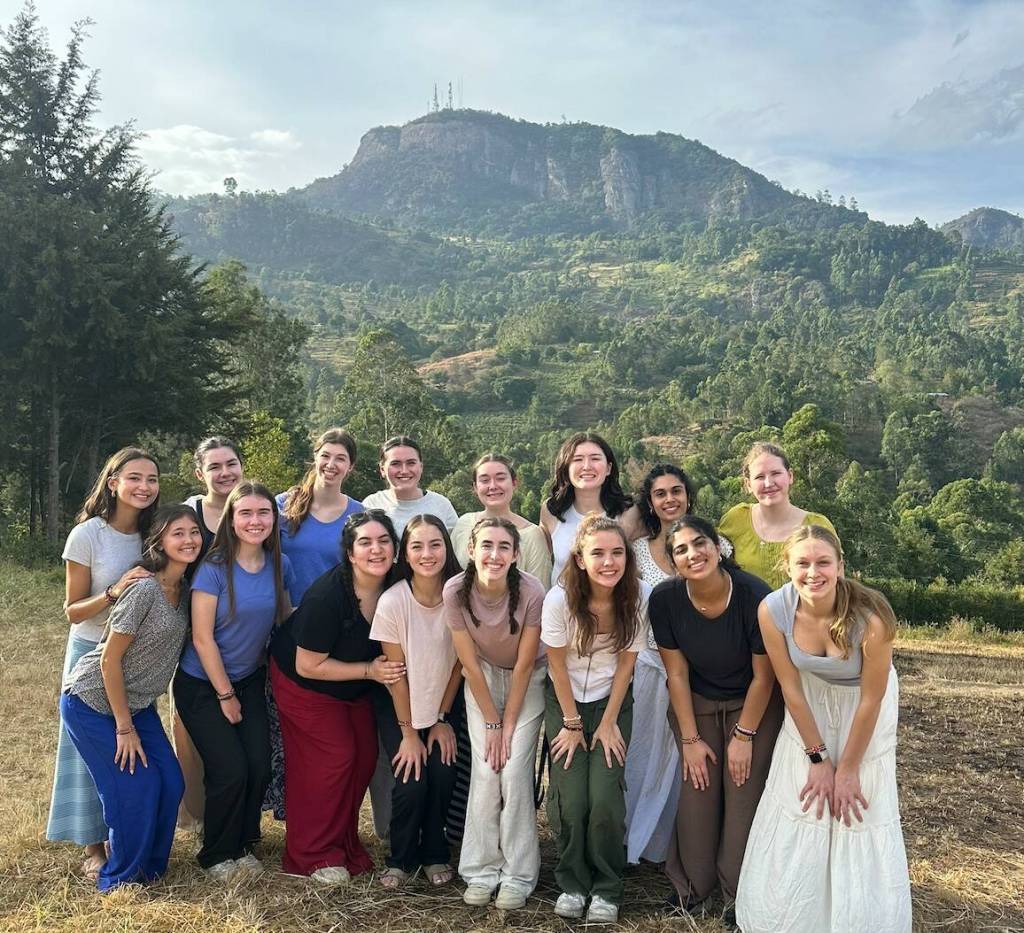
I am a junior at Mercer Island High School and a member of PETRI (Philanthropy, Education, Teaching, Research, Involvement), a student club sponsored by the nonprofit SeaVuria. This past February, I had the privilege of traveling to Taita-Taveta, Kenya, as part of a delegation with 15 other students from PETRI and the Vashon Island High School Girls to Girls (G2G) Club. Five chaperones joined us, including MaryMargaret Welch, adviser to both PETRI and G2G and co-founder and executive director of SeaVuria.
We traveled to visit the students and schools supported through SeaVuria’s educational scholarships and technology programs. My expectations for the trip were simple: making memories, broadening my perspective and having some meaningful moments. What I didn’t predict was how much my understanding of my own life would change.
Our week started with a brief ceremony where the whole delegation met with the scholarship recipients and many of their families. We introduced ourselves and listened to parents express their gratitude for the education their children receive, often bringing us gifts like fruit and baskets. Starting the week this way made our impact feel immediate and direct.
It made me think of how this past January, we reviewed hundreds of applications and selected 156 students to receive scholarships to attend school in Taita Taveta, Kenya. We had raised nearly $45,000 through our fundraising, which went directly toward student scholarships. Many scholars, especially girls, need this scholarship to continue their education in high school since their families cannot afford the yearly school fees to attend high school.
After the ceremony, we attended church with the students. This was a completely new experience for me, but also one I really appreciated. The service reflected the culture’s traditional roots that foster a connection shared by nearly all the students.
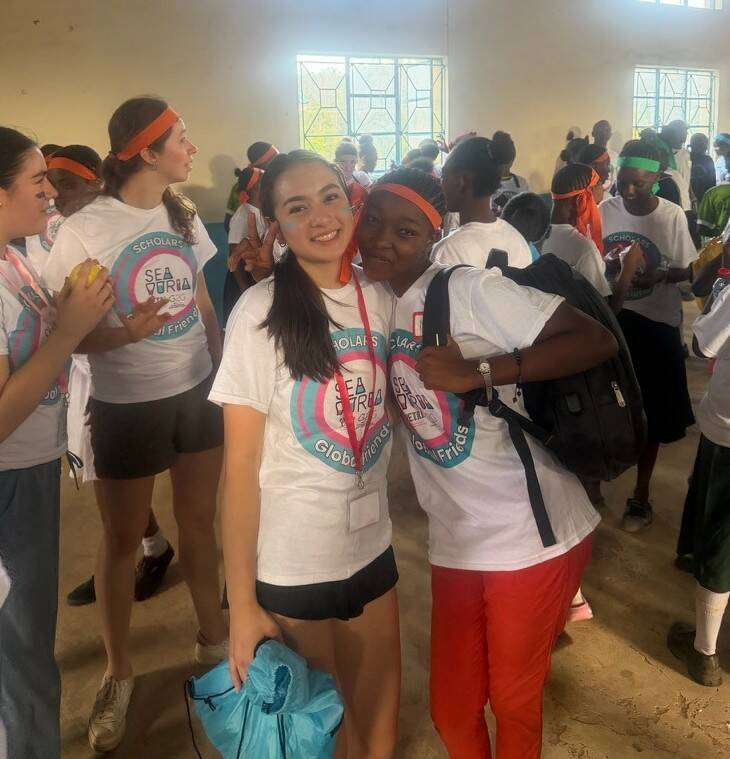
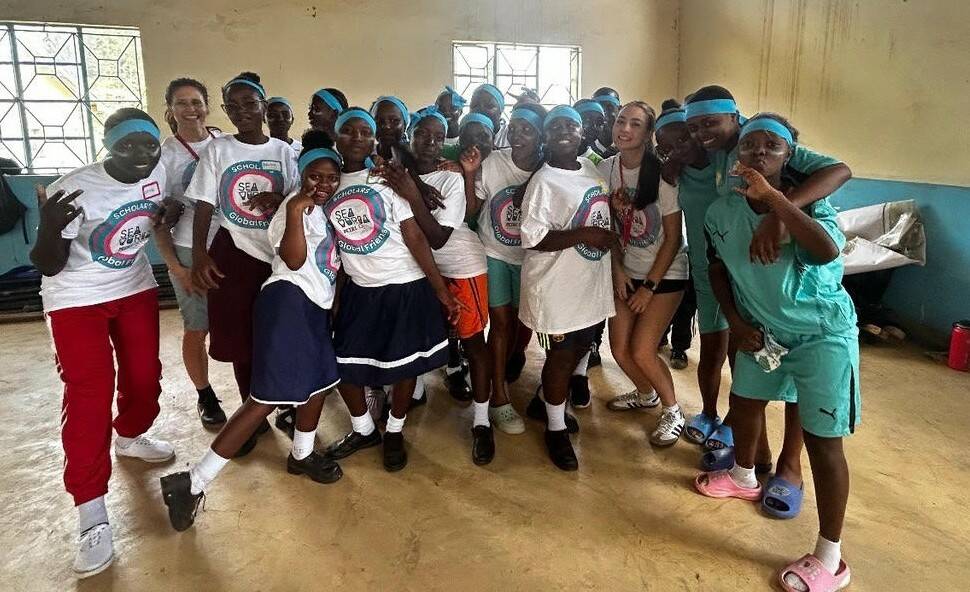
Later in the day, the atmosphere shifted during the field day my group had planned. Even though the day was mostly light and fun, I visually saw our impact as I watched everyone we sponsor pack into one large gym.
I led the blue team, which had 22 students. The barriers that existed on our digital calls were quickly nonexistent despite our differences. Midway through the games, one student took my hand and said that her friend had been looking for me. She led me to my pen pal, Mercy, who instantly gave me a huge hug. It was surreal! Two years ago, when Mercy and I first began chatting, I never imagined I would meet her in person. That day marked the beginning of meaningful connections that grew throughout the week.
Later in the week, we visited several of the schools SeaVuria supports. On one of those days, I sat in a 10th-grade math class. The class was small, with only seven students, and they were all boys. It was a STEM-focused class, which left me unsettled and wondering why more girls were not enrolled. It reminded me of the imbalance in a patriarchal society where boys are often encouraged to pursue science careers more than girls are.
Another time, I visited a different math class where there was a more even mix of male and female students. On that day, a student turned to me and thanked me for the laptops we had brought. Admittedly, his gratitude caught me off guard. At my school, laptops are standardly distributed without a second thought. Here, they were transformative and impactful pieces of technology that connected students with the world.
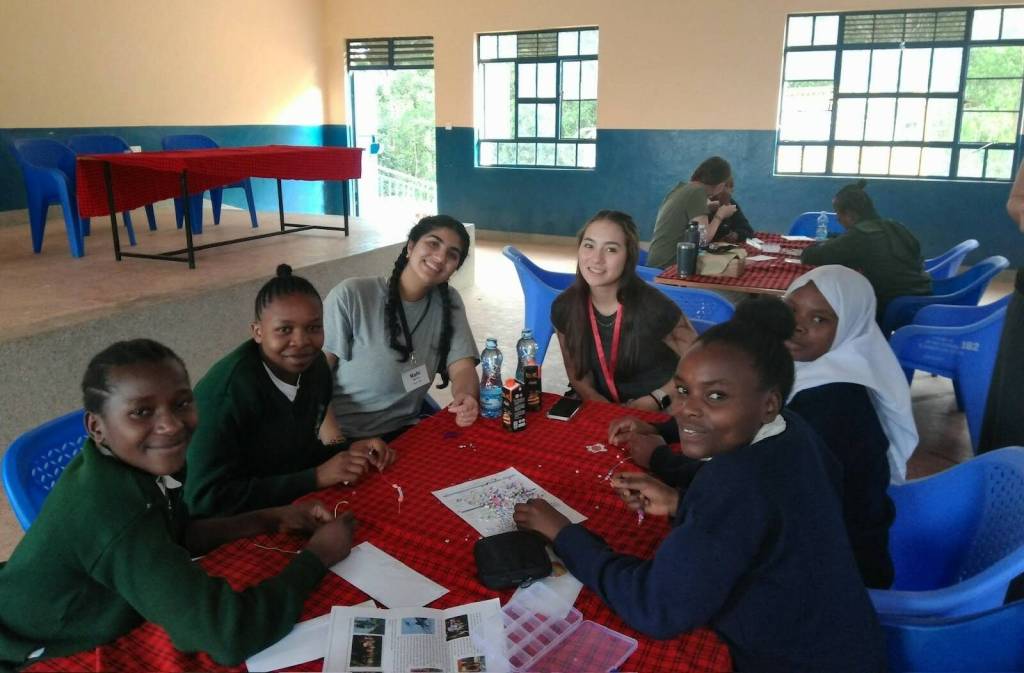
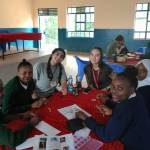
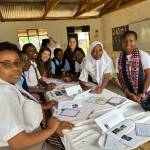
In those classrooms, I also realized something that I, and many others, take for granted. Watching how eager the students were to learn forced me to confront an uncomfortable truth. Many students where I live treat school as a burden. There, students approached education as a cherished opportunity and would do anything to go to school. I left those classrooms with a sense of guilt and was reminded that education is an empowering privilege. Another day, we visited Bura Girls School, one of our partner schools, for a lesson on women’s reproductive health. The purpose was to empower young women and address period poverty. Girls from our delegation gave a presentation, and then we broke off into groups to have more sister-like conversations.
Going into this, I believed that my fellow delegates and I would be leading and informing. Instead, we mainly listened. One girl in my group, Constance, reshaped my understanding. She told us about her aspiration to become a gynecologist, and it became clear that her goal was rooted in lived reality. She spoke personally about how menstruation is stigmatized in her community.
Sitting there, I realized how narrow my knowledge had been. I had previously reduced their struggles to broader ideas about poverty and lack of education. I had not fully grasped the depth of the stigma and harmful practices. I continued talking to Constance throughout the day, and she quickly became someone I will remember forever.
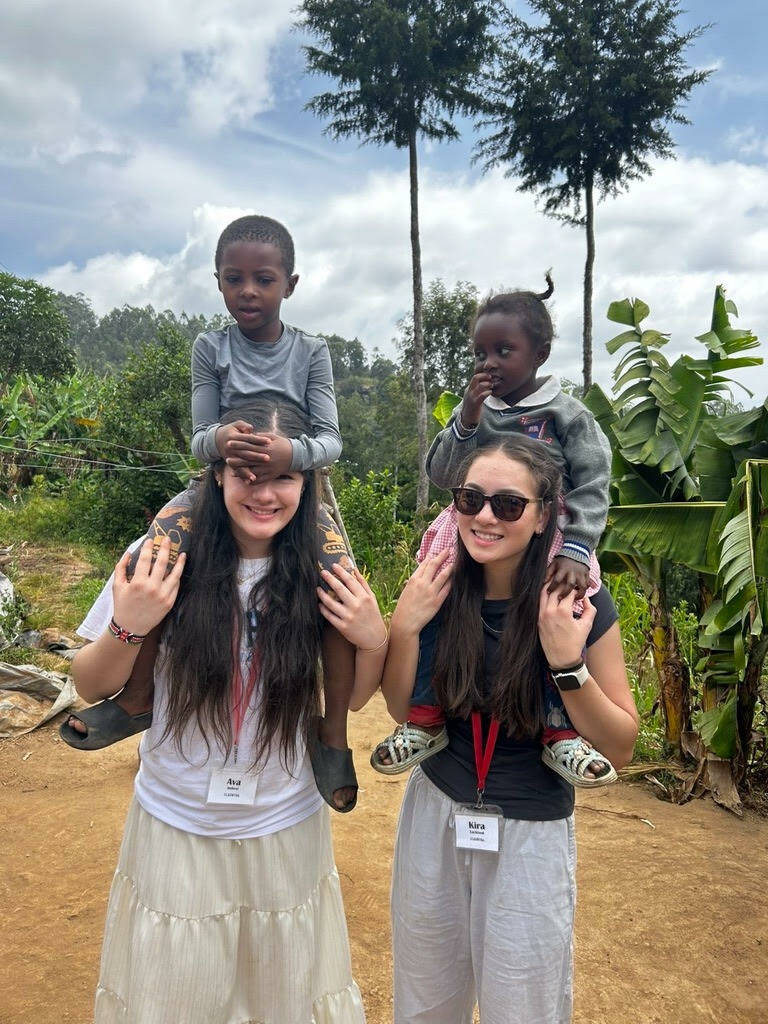
Further into the week, I had the opportunity to do a home visit. That morning, I learned that the home we were going to was Mercy’s, my pen pal. The walk to her home was about 30 minutes of steep incline on thin paths in the sun and heat. Mercy moved ahead of us with ease while we struggled to keep up. When we arrived, we were immediately greeted by her kind family. Her home was a single room, and the main gathering space was outside, with plastic chairs set out for us.
Later that day, I spoke to one of Mercy’s friends, who often walks to school with her. She told me that she lives on the same hill as Mercy, but much farther down, so it is an hour’s walk each way. I was reminded of all the times I complained about short drives and was profoundly humbled.
Altogether, these moments challenged the assumptions I carry without even noticing. Not only was my experience in Kenya impactful by observing the work I put into PETRI firsthand, but it also surfaced the privilege I rarely think about. I gained a new perspective, not just on their lives, but on my own.
To learn more about PETRI and SeaVuria and make a donation to their current Women’s Reproductive Health campaign, visit seavuria.org or email seavuria@gmail.com.
Kira Lackland is a junior at Mercer Island High School and vice president of communications of PETRI.