
What MI residents should know about PSH, shelters and public process before July 7 / Commentary
Published 4:30 pm Monday, June 29, 2026
When my husband and I moved to Mercer Island in 2008, what stood out was the serenity. Over time, we realized residents are not just paying a premium for location. They are paying for a setting: quiet streets, mature trees, parks, trails, top-rated schools, parking around Town Center and a sense of safety.
Those qualities did not happen by accident. They were shaped by local zoning, city code, public process and decisions made by elected city council members.
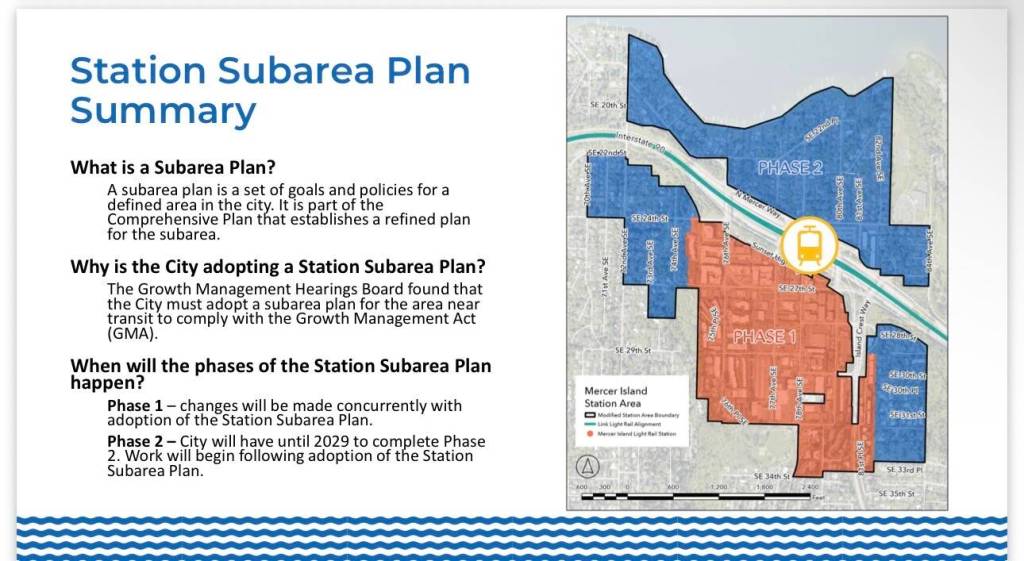
New state housing laws and related city code changes could reshape parts of Mercer Island: eight-story buildings in Town Center, six-story buildings in nearby multifamily areas, denser housing around the light rail station, and shelters moving from a conditional-use permit process with a public hearing to staff review.
The questions are not only about shelters or building height. They are about who might pay, where these facilities may go, what public process remains, and what happens next.
What Mercer Island Must Plan For
Under state law, Mercer Island must plan for 1,239 new housing units by 2044. Of those, 517 are in the lowest-income category, below 30 percent of area median income. That includes 339 extremely low-income units and 178 permanent supportive housing units, or PSH.
PSH is subsidized housing with voluntary support services for people experiencing homelessness, including people with mental health, substance use or disability-related needs. State law describes it as lower-barrier housing for people with rental, criminal or behavior histories.
The city also has to plan for 237 emergency housing beds for people who are homeless or at risk of homelessness.
As part of code changes based on new state law, Mercer Island is proposing to remove a local rule that keeps emergency and homeless shelters at least 600 feet away from places where children gather, including schools, parks and the JCC.
Who Pays
City staff estimated construction alone for 510 extremely low-income units could cost $265 million to $311 million. That does not include water, sewer, stormwater, roads, other infrastructure upgrades or ongoing PSH operating costs.
Mercer Island must plan for housing capacity and allow certain projects to be built. What is not clear to me is whether the city must ensure those units are actually built, and if so, who pays.
Seattle’s housing projects are funded in part by a $970 million voter-approved property-tax levy. Bellevue uses a local sales tax, city housing funds, ARCH funding and developer payments.
Mercer Island’s possible funding discussed includes ARCH, developer payments, fee waivers, grants, tax credits, low-interest loans and providing public land. But the city has not identified a funding source large enough to cover the projected cost.
What Happens Before Approval
How would residents find out if a shelter, PSH or emergency housing project is proposed?
Under the draft code based on new state law, residents may not get a notice until after a permit is approved.
For emergency shelters providing temporary shelter for people who are homeless, the required 500-foot notice would come after permit approval and before the facility opens. The applicant also must hold at least one public meeting after permit approval.
PSH does not follow the same post-approval notice rule for emergency shelters. But it must be allowed in zones where residential dwelling units are allowed, and it does not require a conditional-use permit or public hearing.
A public hearing before approval gives residents a formal chance to raise concerns before the city decides. A meeting after approval does not.
In 2024, Kenmore residents testified at a public hearing before the city council voted on a proposed 100-unit permanent supportive housing project. The council later voted 5–2 to deny the development agreement.
What Residents Asked
Residents raised concerns during the June public hearings about safety, neighborhood change and public notice.
Kevin Richards asked, “Is this a done deal? Can it be reversed? Is there another public hearing?”
Lynn Warwick said, “Please publicize it more so the community knows about it.”
David Klinghoffer pointed to political accountability, saying the state laws behind these changes were supported by all three of Mercer Island’s 41st Legislative District lawmakers, including two seeking re-election this year.
The Planning Commission chair also said the city had little discretion. “These are mandatory,” he said. “These are being forced on us from the state.”
Peggy Hammerly asked the Planning Commission, “Are you the next step as far as who takes our voice to the next level?”
What Happens Next
Before city council’s scheduled July 21 vote, key questions remain: how much say Mercer Island still has, what public notice will remain, and how future projects would be funded.
Residents have two more chances to speak during public comment, on July 7 and July 21. The city council is scheduled to hold a first reading on July 7 and a second reading on July 21, when adoption is targeted. Final compliance is due on July 31.
Two of the 41st Legislative District lawmakers Klinghoffer referenced are on the ballot this year. One race has three candidates and goes to the August primary; the other has two, so both candidates advance to November.
Linnea Augustine is a Mercer Island resident, a member of the Rotary Club of Mercer Island, a supporter of the Mercer Island Schools Foundation, and a guest columnist for the Mercer Island Reporter.